How fleets can take protective measures against vehicle thefts
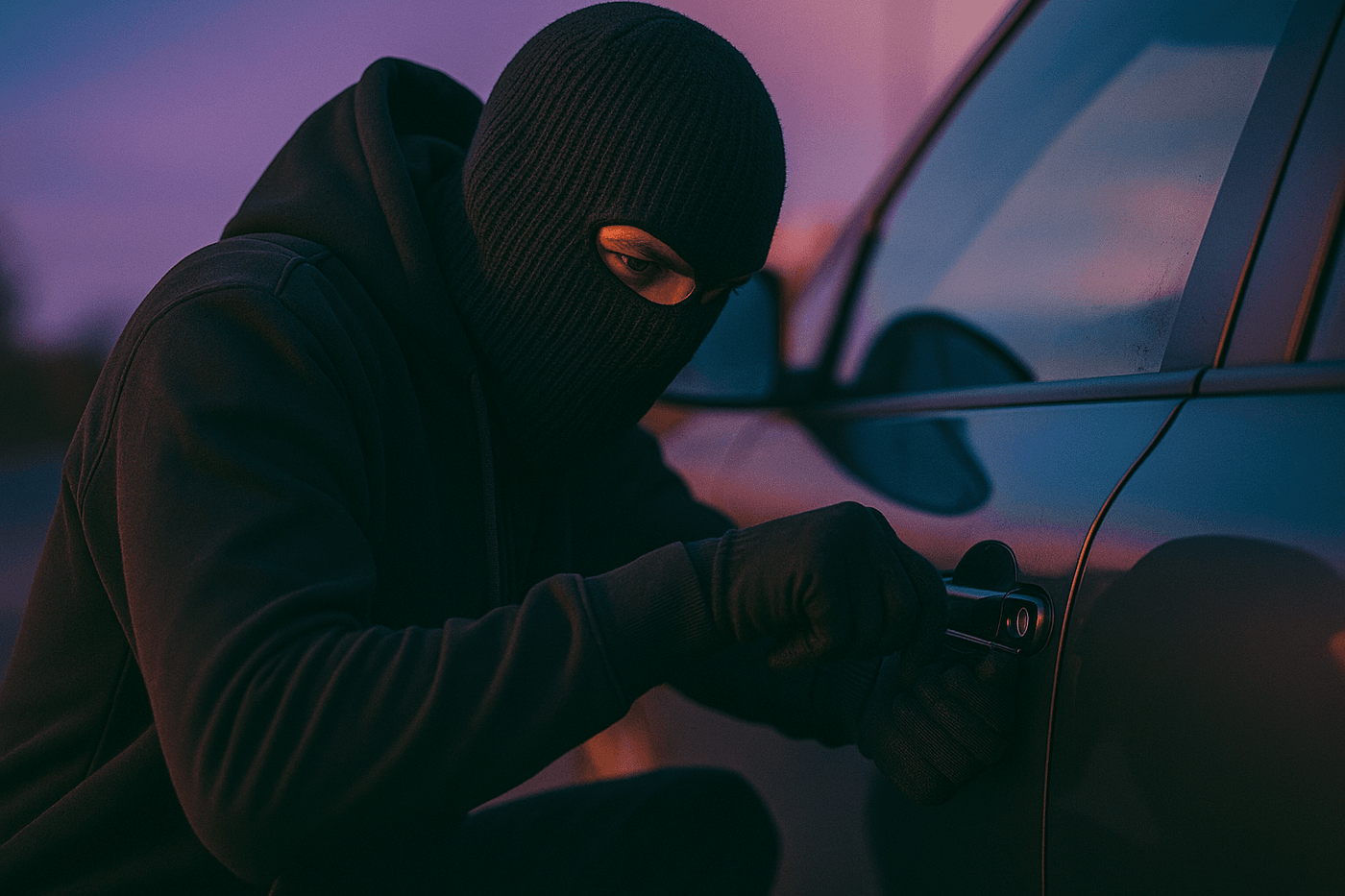
It's no secret that vehicle thefts are high for fleets. Why? Fleets have systems. Once a fleet's system is learned, there's more reward with the crime. So what can fleets do? This article explains the mind of a thief and gives solutions to keep vehicles safe.
A personal story
The CEO of Mobility Places sill remembers just joining her former job. It was a carshare organization, and as they grew, thefts grew with them. Along with the Head of Trust & Safety, they hired a third-party security firm to steal one of their vehicles. Their goal was to get into the minds of criminals and protect themselves from future threats.
The security team showed up at the parking facility on a busy afternoon wearing polo shirts with a corporate company logo. The shirts were ordered online for $20. They carried laptop bags. They looked the part. And they started chatting with employees like they'd worked there for years.
"Hey, what time does the evening shift usually come in?" "Your operation looks great, can I get a tour?" Just casual conversation. Friendly. Confident. Within an hour, they knew everything they needed: access protocols, shift changes, which vehicles were going where.
The next day, they came back during shift change. It was a chaotic window where everyone's distracted and nobody's quite sure who's supposed to be where. They walked straight to the key box (which was shown to them with pride the day before), got two vehicles, and drove off.
Ten minutes on property. No one questioned them. No one stopped them. No one even looked twice.
Three hours passed before anyone noticed the car was gone. In those three hours, the car could have been on it's way to black market disassembly or resale. But, the time that passed was one issue. The ease to break a system was another...
Fleets are systematically vulnerable
That security test revealed what professional thieves already know: fleet operations create multiple vulnerabilities that, when combined, make vehicle theft more rewarding than targeting personal vehicles. For fleet operators, understanding these systemic weaknesses is the first step toward addressing them.
Pattern recognition and predictability. Fleet vehicles operate on schedules. Delivery vans return to the same depot each night. Service trucks follow regular routes. Rental cars cycle through known locations. These patterns allow thieves to conduct surveillance and identify the optimal time to strike. Once they understand one vehicle's routine, that knowledge often applies to dozens of others in the fleet.
Neighborhood familiarity. Thieves typically scout nearby neighborhoods. Since fleet vehicles congregate in company lots, rental facilities, or designated areas, thieves can can casually visit the locations during business hours, note security measures, camera blind spots, lighting conditions, and access points.
Uniform equipment and known inventory. Fleet vehicles come with predictable, valuable contents. Work trucks contain standardized tool sets worth thousands of dollars. Service vehicles carry specialized equipment. Delivery vans hold packages. Because companies outfit entire fleets similarly, a thief who learns what one vehicle contains knows what to expect from the rest (eliminating the guesswork that comes with targeting random personal vehicles).
Delayed detection times. When someone steals a personal vehicle, the owner typically notices within hours. Fleet vehicles might not be missed until the next shift, scheduled maintenance, or job assignment. Some companies don't discover thefts until periodic inventory checks, potentially days later. This detection delay gives thieves crucial time to strip vehicles, remove equipment, or transport them far from the scene.
Professional networks and volume opportunities. Organized theft operations specifically target fleets because they can move volume through established resale channels. Stolen work trucks get repainted and sold to contractors. Equipment moves through online marketplaces. Rental cars receive new VINs and enter used car markets. A thief who steals one personal vehicle has one item to fence; a thief who cracks a fleet system can supply an ongoing operation.
Social engineering opportunities. The people who care the most are, sadly, often the weakest link. Thieves can pose as employees, vendors, or contractors. They can gather intelligence through casual conversations. Without dedicated security personnel who are trained to spot these tactics, fleet operations remain vulnerable to confident criminals who simply act like they belong.
Fleets can make better decisions to protect their vehicles when choosing (and using!) parking structures
Fleets often select parking facilities with a gut-feel on risk and they often feel constrained by the parking lot's existing infrastructure. It doesn't have to be this way. Fleets can take protective measures to make a big difference.
Knowing the Area Safety Grade of every parking structure. Before placing vehicles anywhere, fleets can understand the real risk profile of a specific area relative to the surrounding neighborhoods. Mobility Places provides Area Safety Grade for every location, analyzing local crime data, theft patterns, and relative city risk factors.
Knowing the Area's Safety Grade isn't about avoiding certain neighborhoods. It's about matching security investments to the actual threat level. A high-risk location might justify additional measures like requesting on-site security or enhanced lighting, while a low-risk area might be fine with the basic protocols that come on the lot. Making location-based risk assessment a standard part of the location strategy, not an afterthought when theft occurs, can make all the difference.
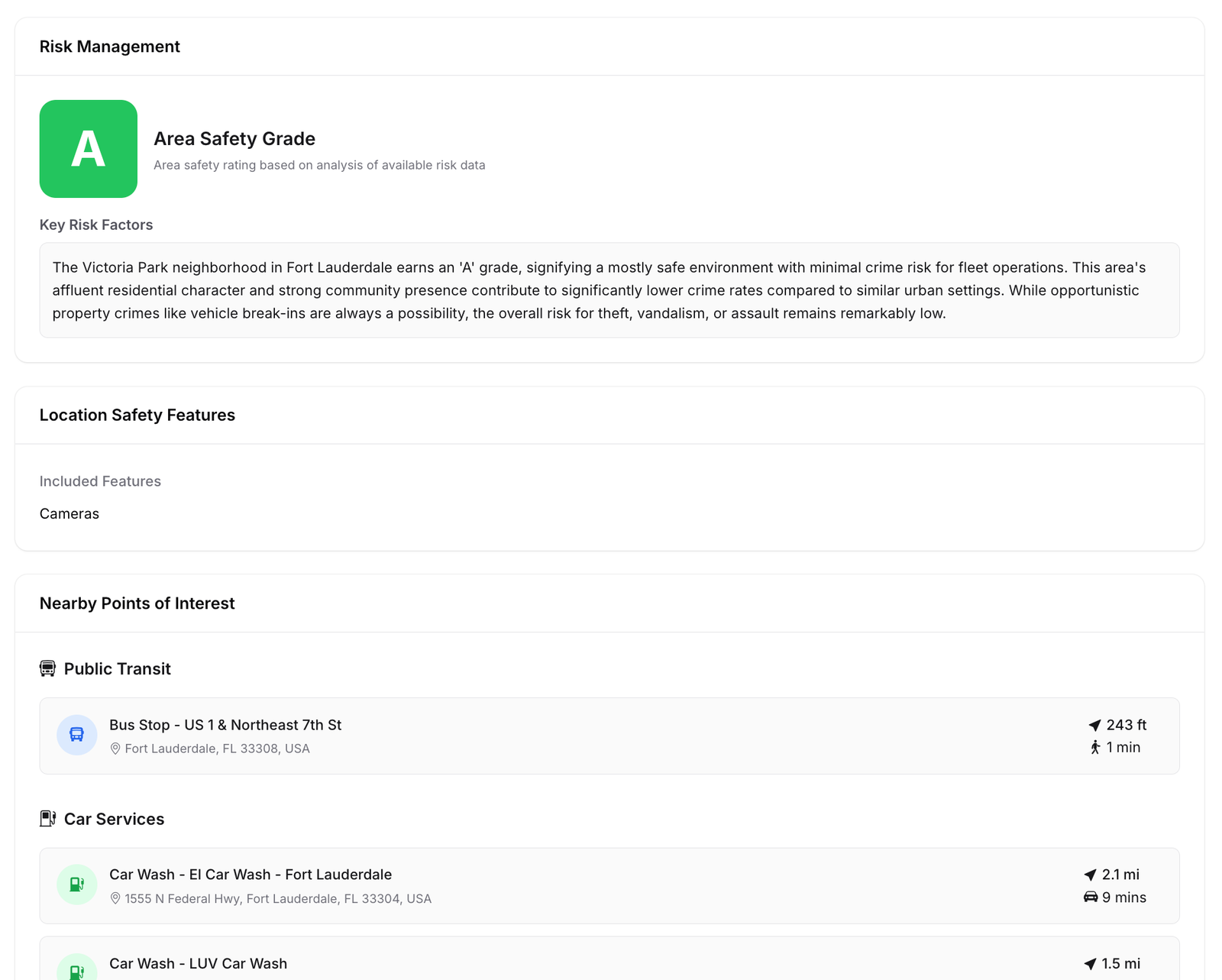
Assessing Safety Features and requesting changes. Walking the parking structure at different times of day before committing reveals a lot. Where are the cameras? Are there blind spots on the floors where vehicles would park? Fleets can request parking in parts of the parking lot that are line of sight to the camera.
Lighting conditions matter too, especially in stairwells, elevators, and corners where someone could work on a vehicle unobserved. A dimly lit structure is an invitation for theft. Fleets can ask Mobility Places about camera retention policies and who monitors feeds. If the structure's existing surveillance is inadequate, some facilities will allow fleets to install additional cameras covering their area. Visible cameras deter opportunistic theft. If a thief is choosing between targets, they'll pick the vehicle in the dark corner over the one clearly under surveillance.
Training employees on structure-specific social engineering risks. Parking structures present unique social engineering vulnerabilities. Fleets can train staff that anyone striking up conversation in or around the parking area could be gathering intelligence. Employees should never discuss which vehicles are parked where, when they're accessed, what they carry, or what access codes or protocols the company uses. The "friendly person at the elevator" might be conducting surveillance.
Building unpredictability into the strategy. Fleets typically prefer reserved parking spots. But, there's a benefit to free floating parking when it comes to risk. While this may not always be ideal, it should at least be considered. Even within a parking structure, fleets can disrupt the patterns thieves rely on. Not parking fleet vehicles in the same spots every day means thieves surveilling the structure can't easily note which spaces contain the most valuable vehicles and equipment. Rotating parking floors and sections when possible makes surveillance more difficult.
For high-value vehicles or those carrying expensive equipment, fleets can also consider storing them in more visible, high-traffic areas of the structure rather than tucked away corners. Counterintuitively, visibility can be protection.
The bottom line is that fleet vehicle theft isn't random. It can be very strategic, systematic, and scalable. Thieves invest time in understanding a fleet's operations because the payoff justifies the effort. We hope that now fleets also have the tools to understand the mind of a criminal and protect themselves against risk.